Buying guide
Buy Peptide Fridge Online: What to Check Before You Order
Written by the VIALYX™ team · Updated August 2026 · Roughly a 10 minute read
Buying an appliance online is mostly a reading exercise. You cannot open the door, you cannot listen to the compressor and you cannot lift it to judge the build, so the entire decision rests on what the listing tells you and what the seller is willing to put in writing. That is not a disadvantage as long as you know which sentences matter.
This guide is for the point where you have decided you want a dedicated fridge and you are about to order one. It covers what to look for in an online listing, which features actually change daily use, what to verify before paying, and how to place the order without discovering something inconvenient a week later. If you are still weighing which selling route to use — direct, retailer, marketplace — the companion piece on choosing where to purchase covers that instead.
Two clarifications. This article does not quote prices, delivery times or stock, because those change and a guide is the wrong place to promise them; the online purchase page is where those specifics live. And nothing here is medical advice — follow the guidance supplied with whatever you keep refrigerated, then choose equipment that lets you follow it.
1. What to Look for When Buying a Peptide Fridge Online
Online, you are judging two things at once: the product and the party selling it. Both have to hold up, and buyers usually over-examine the first while barely glancing at the second.
On the product, the useful filters are narrow. Will the items you keep stand upright and stay visible in that interior? Can you read the temperature instead of trusting a dial? Does the footprint fit the spot you measured, door swing included? Is the plug for your country included rather than assumed?
On the seller, the filters are even simpler. Is there a company name and a contact route that answers? Is the delivered total visible before checkout? Are the return window and warranty stated in numbers? A page can pass every product test and still be a poor purchase if nobody is home behind it.
2. How to Evaluate an Online Product Listing
Read the interior, not the exterior
Exterior photography sells; interior photography informs. You want at least one honest shot of the shelving with the door open, ideally with something in it for scale. If every image is a styled render of a closed unit, the listing has made a decision about what it would rather you not measure.
Check whether the specifications are attributable
Specifications should read as though someone measured this unit. Generic marketing phrasing that also appears verbatim on twenty unrelated compact fridges suggests nobody did. Counter-intuitively, a table that marks some rows as still to be confirmed is a better sign than one where every row is conveniently complete.
Watch the claim vocabulary
Words like medical, clinical, pharmaceutical or laboratory-grade get used loosely in consumer listings. No consumer appliance can guarantee the condition of what you put inside it, and a listing implying otherwise is asserting something it cannot support. If a page claims a regulated classification, that should be verifiable somewhere other than its own headline.
Read reviews for texture
Scores tell you little. Reviews that mention a specific room, a specific annoyance and how it was resolved tell you how the unit behaves and how the seller responds. Short generic praise is neutral information at best.
3. Features to Compare Before Buying
Not every feature deserves equal weight, and online listings are designed to blur that. Three things change your experience every single day: whether you can read the interior temperature, whether the interior layout suits the shape of what you store, and whether the door reliably closes and seals without your attention.
A second tier matters in specific situations: noise if the unit shares a bedroom, physical footprint if space is tight, portability if it will move between homes, and adjustability if you want to fine-tune a setpoint. Everything below that — finishes, lighting colour, badge design — is preference, and it is fine to have preferences as long as they are not doing the deciding.
4. Temperature Monitoring
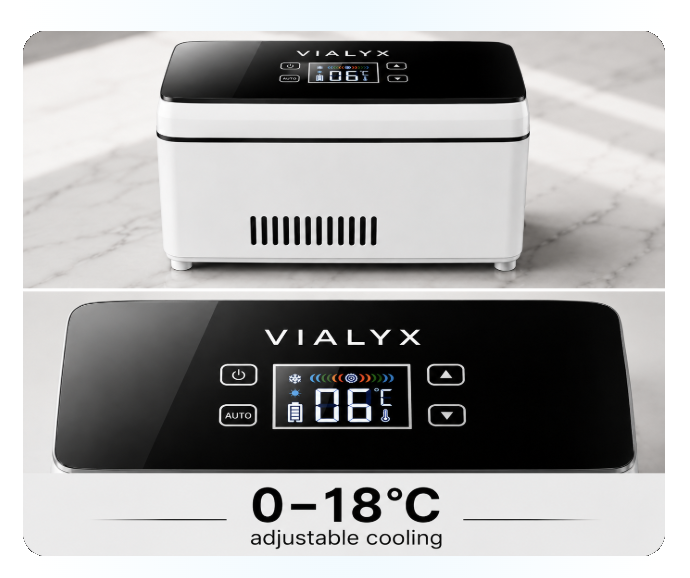
The single most useful distinction between compact fridges is whether they tell you anything. A dial marked one to seven communicates a setting, not a condition. A readable interior figure lets you confirm the unit is doing what you asked in the time it takes to walk past.
When you are reading a listing, establish which of the two you are buying, and whether the figure shown is the interior reading or the target. If it is not stated, ask before ordering — this is exactly the kind of detail buyers assume favourably and regret quietly. If a unit only offers a dial, an inexpensive separate thermometer restores the visibility, so long as you accept the extra step.
5. Storage and Organization
Organisation is what people actually notice after a fortnight. A good interior lets every item stand upright, stay visible from the front, and be lifted out without moving its neighbours. A poor one forces a second layer, and stacking is where labels get hidden, items get knocked over and the door stays open longer than it should while you search.
Litres tell you volume and nothing about geometry, so read the shelf heights and the usable width instead. Count what you keep refrigerated in a typical month, add modest headroom rather than triple, and check the photographs for whether items your shape sit in a single layer.
6. Size and Placement
Measure the intended location before you shortlist anything: width, depth, height, plus the clearance the manufacturer asks for and a door that can open fully without meeting a wall, a cupboard edge or a chair. The commonest online regret is not a unit that fails to fit — it is one that fits and cannot be opened comfortably in the space it fits into.
Then think about the room rather than the shelf. A bedroom or a study normally beats a garage, because unheated spaces swing through the year and the unit spends its life fighting that. And a socket should be within reach without a lead crossing a walkway, which is a smaller point that becomes a daily one.
7. Dedicated Peptide Fridge vs Generic Mini Fridge
Both will get cold. The difference is what each was designed to do with that cold, and online it is easy to buy the wrong one because the search term has been attached to both.
| When ordering online | Dedicated peptide fridge | Generic mini fridge |
|---|---|---|
| What the interior is built for | Small upright containers, kept visible in a single layer | Cans and bottles, with tall shelves and racks |
| Reading the temperature | Normally shown, so a check costs two seconds | A numbered dial with nothing to read back |
| What a listing usually shows | Interior photographs and an attributable specification table | Exterior renders plus a generic compact-fridge spec block |
| Sharing the space | One category of item, nothing pushed aside | Whatever else needs to be cold that week |
| Plug and variant handling | Country plug and size usually chosen as an order option | Often one configuration, adapter left to the buyer |
| Seller commitments online | Named warranty holder, stated return window, contact route | Varies widely; marketplace listings often commit to little |
| Price | Higher; the premium buys layout and visibility | Lower, sometimes considerably |
A generic compact fridge is a legitimate purchase if extra cold space is the goal. It stops being legitimate when a listing charges a dedicated-product premium for it, which is why the interior photograph and the temperature question are worth more than any part of the title.
8. What Product Information Should Be Verified?
Whoever you buy from, a short list is worth having in writing before you pay. External dimensions with the required clearance. The interior arrangement and usable shelf height. Whether the temperature is shown or only set. Whether the setpoint adjusts in useful increments. Whether the door latches by itself. The power configuration supplied for your country. And what is physically in the box.
Where a page does not answer one of these, ask rather than infer. An unstated figure is not a good figure or a bad one — it is unstated, and you are entitled to have it in a sentence before money moves. For the reasoning behind why these particular attributes outrank capacity and styling, the pre-purchase guide to dedicated units goes deeper than we will here.
See the product page first
The gallery, interior photographs, feature list and specification table exactly as they stand today — including the rows still marked to be confirmed.
9. Questions to Ask Before Ordering
Send these as one short message. The content of the reply matters, and so does whether a reply arrives at all — it is the only part of the transaction you can test for free before paying.
- 1.Which plug configuration would ship to my address, and is it included rather than sold separately?
- 2.What will the total be at checkout with delivery included?
- 3.Is the exact version shown in the photographs the one you would dispatch?
- 4.What is your current dispatch window, and which carrier handles the parcel?
- 5.How many days do I have to return it, and who covers return shipping?
- 6.How long is the warranty, and which company processes a claim?
- 7.Which rows of the specification table are confirmed, and which are provisional?
- 8.If it arrives damaged, what is the process and how quickly must I report it?
10. Shipping, Returns and Order Details
Fridges are heavy, awkward and easy to damage in transit, so the logistics are part of the purchase rather than an afterthought.
Before you order
Confirm that the seller ships to your address, what shipping costs there, the dispatch window and delivery estimate, and whether a signature is needed. For cross-border orders, ask explicitly whether duties are collected at checkout or on delivery. That one question prevents most unpleasant surprises.
On arrival
Inspect the outer packaging before signing where that is possible, and photograph any damage before opening. Damage claims usually fail on evidence rather than entitlement. Keep the packaging until you are certain you are keeping the unit.
Returns and warranty
You want three numbers and one name: return days, who pays return postage, warranty length, and which company honours it. Anything softer than that is reassurance, and reassurance is not a term.
11. Common Mistakes When Buying Online
Comparing headline prices
The cheapest item is often not the cheapest order once shipping, an adapter sold separately and border charges land.
Ordering the wrong configuration
Size and plug are usually options rather than defaults. Re-read the basket line before paying; it takes ten seconds and prevents the most common return.
Buying litres instead of geometry
A larger number on the capacity line does not mean your items will stand upright. Shelf height and usable width decide that.
Treating silence as a specification
If the page did not say it, it has not been said. Optimistic gap-filling is how buyers end up with a dial where they expected a display.
Skipping the pre-sale message
Five minutes of email is the single most predictive thing you can do about the experience after checkout.
Letting urgency decide
Countdowns are a sales technique at least as often as they are a fact. A unit worth buying at a discount is worth buying next week.
12. VIALYX™ Peptide Fridge
VIALYX™ is sold direct online, which means one organisation writes the product information, takes the order and answers afterwards. For a low-volume product we think that is the honest arrangement, and it removes the layer where an order question and a warranty question get handed between two companies.
On specifications we hold ourselves to the standard this article asks you to demand: what is confirmed is published, and what is not yet confirmed is left visibly open on the VIALYX™ Peptide Fridge page rather than filled with a number that would read plausibly. That is less tidy than a complete table, and it is the difference between a specification and a guess.
On classification, plainly: VIALYX™ is a consumer refrigeration product intended for dedicated home storage. It is not a medical refrigerator, a medical device or laboratory equipment, and we make no certification, regulatory or stability claims for it. If your situation requires equipment from one of those categories, buy from that category instead.
Ready to order?
The purchase page carries the current options, plug choices and shipping arrangements in one place — read them there rather than taking figures from a guide.
13. How to Order a Peptide Fridge Online
The sequence is short, and doing it in order prevents nearly every avoidable problem. Measure the spot, door swing included. Count the items you keep. Read the product page and note which specification rows are still open. Choose the size that satisfies both your space and your item count. Select the plug configuration for your country.
Then send any remaining question as one message, wait for the reply, and check the delivered total, return window and warranty before you pay. When those are settled, complete the order through online ordering. If you would rather see the commercial detail laid out as an offer, the current offer page presents the same information from that angle.
We deliberately do not state availability here. Stock and dispatch information changes, and a guide that promised it would be wrong sooner or later — check the purchase page for what is true today.
14. Online Buying Checklist
Run this against any online listing, ours included. If more than two lines cannot be answered from the page or from the seller, do not order yet.
- The configuration in my basket matches what I intended: size, plug type and anything described as included.
- The plug supplied suits my country, with no adapter assumed on my side.
- I am comparing the delivered total, not the headline price.
- Any duties or import charges are either collected at checkout or explained on the page.
- The dispatch or delivery estimate is written down rather than implied.
- The return period is stated in days, and I know who pays return postage.
- The warranty length is stated, along with which company honours a claim.
- There is a working contact route, and I have used it once before ordering.
- Interior photographs show shelving and layout, not only a styled exterior.
- The unit shows an interior temperature rather than only a setting dial.
- The setpoint is adjustable in steps that mean something.
- The door seals and latches by itself rather than depending on how I close it.
- I measured the intended spot, including door swing and the clearance the maker asks for.
- The specification table separates confirmed figures from anything still to be confirmed.
- No claim I am relying on is medical, regulatory or stability-related, unless it is independently verifiable.
- Nothing important in this purchase rests on an assumption instead of a sentence the seller wrote.
15. Frequently Asked Questions
Is buying a peptide fridge online safe?
It is as safe as the seller is specific. The risk in an online appliance order is almost never the payment step — it is ambiguity: a plug that does not match your country, a delivered total that grows at checkout, or a return window nobody wrote down. Establish those three things in text before paying and you have removed most of the exposure. If a page will not answer them and nobody replies to a question, that is the signal to shop elsewhere.
What should I check before I press order?
Read the configuration line rather than the headline: the size, the plug type supplied for your country, and whatever the page says is included in the box. Then read the money and the terms: delivered total with shipping, the return period in days, warranty length and who honours it, and the dispatch estimate. Finally check the specification table for rows that are still unconfirmed, and ask about any of those you would rely on.
How do I know whether a listing is a dedicated fridge or a relabelled mini fridge?
Look at the interior photographs and ignore the product title. A unit built for small upright containers shows shelving that holds them visible and unstacked; a relabelled drinks cooler shows can racks, tall gaps and one flattering exterior render. The second tell is the temperature: a dedicated unit normally lets you read the interior figure, while a generic compact fridge gives you a numbered dial and asks you to trust it.
Should I buy the cheapest one I can find online?
Compare delivered totals rather than headline prices first, because shipping, separately sold plug adapters and border charges routinely close a gap that looked decisive. After that, a lower price is only genuinely lower if the unit still passes the parts that affect daily use — readable temperature, an interior your items fit upright, a door that latches by itself — and the seller still commits to a return window in writing.
What does VIALYX™ publish about the fridge?
Only what is confirmed. Where a figure has not been verified it is left visibly open on the product page rather than filled in with a plausible number, so you can tell a specification from an estimate. VIALYX™ is a consumer refrigeration product for dedicated home storage — not a medical refrigerator, medical device or laboratory equipment — and we publish no certification, regulatory or stability claims for it.
Where do I actually place the order?
Through the online purchase page, which is where current pricing, size and plug options and the shipping arrangements are set out together. This article deliberately does not quote prices, delivery times or stock, because those change and a guide is the wrong place to promise them. Read the guidance here, then take the specifics from the purchase page itself.
16. Conclusion
Ordering online works well when you replace the things you cannot do in person with things you can: read the interior photographs, read the specification table honestly including its gaps, and get the total, the timing and the terms in writing. That is the whole method, and it takes one evening rather than one week.
After that, order and stop researching. If you would like one more comparison before committing, the compact fridge comparison is the natural companion to this one; otherwise the purchase page has everything the decision still needs.
Take the next step
See the current options and shipping details on the purchase page. VIALYX™ is sold as a dedicated consumer product, with no medical or certification claims attached.
This guide is general purchasing information about refrigeration equipment. It is not medical advice, not regulatory guidance and not storage guidance for any specific product. Always follow the instructions supplied with your own products.